

You are reading the kohero newsletter currently with 5,667 others from our kohero community. This edition from Thursday, April 23, 2026, comprises approximately 1,686 words and about eight minutes of reading time.
Hello and Salam from the editorial team 👋
Welcome to a small special edition of our kohero newsletter, at the start of which we want to recommend a text from the online magazine to you.
The Research Institute for Social Cohesion (FGZ) has published the most comprehensive study to date on racism in German authorities. Our author Anna has worked through it and summarized the most important results for you here.
 Anna Feldmann
Why do we start the newsletter with precisely this article?
Because it addresses exactly the conditions that prompted us some time ago to introduce the kohero Dossier as a permanent format. Because time and again we encounter grievances in the area of asylum and flight that receive too little attention in the public eye.
We therefore want to take an even closer look, create more space for longer research at kohero and also collaborate with experienced journalists.
And with that, we finally come to the occasion for this newsletter edition. Because: Today is the day!
The new kohero Dossier is ONLINE NOW ✨
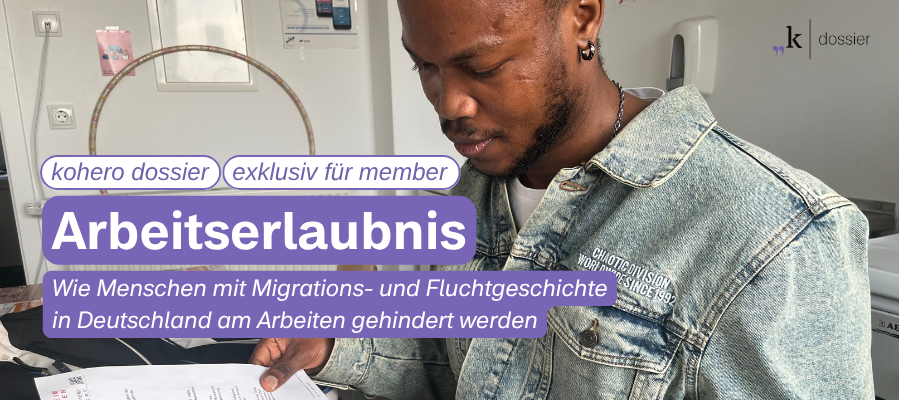
Dossier: Work Permit
Hardly any topic has been discussed as hotly in recent weeks and months as the German labor market. Countless positions remain unfilled, sick leave is still extremely high, and many employees complain about high stress and a shortage of skilled workers, especially in so-called bottleneck occupations. At the same time, there are many people in Germany who are simply not allowed to work because they are stuck in lengthy asylum procedures or toleration status. What is going wrong here?
Our authors Vanessa Barisch, Selin Erdogan, Emad Almansour, Jasmin Kranz, and Wanda Margret Maijka have investigated this question. The research shows how outdated bureaucracy makes it difficult for people with migration and refugee backgrounds to access the labor market and how structural racism in German authorities is sometimes clearly noticeable.
Furthermore, we talk to those affected about the impact this systematic exclusion and forced inactivity have on their psyche and daily lives: “Nothing is worse than sitting around idle for five years”, says Desmond William, for example, whom you will meet in our cover story.“After all, I didn't come to Germany to waste my whole life waiting.”
 Vanessa Barisch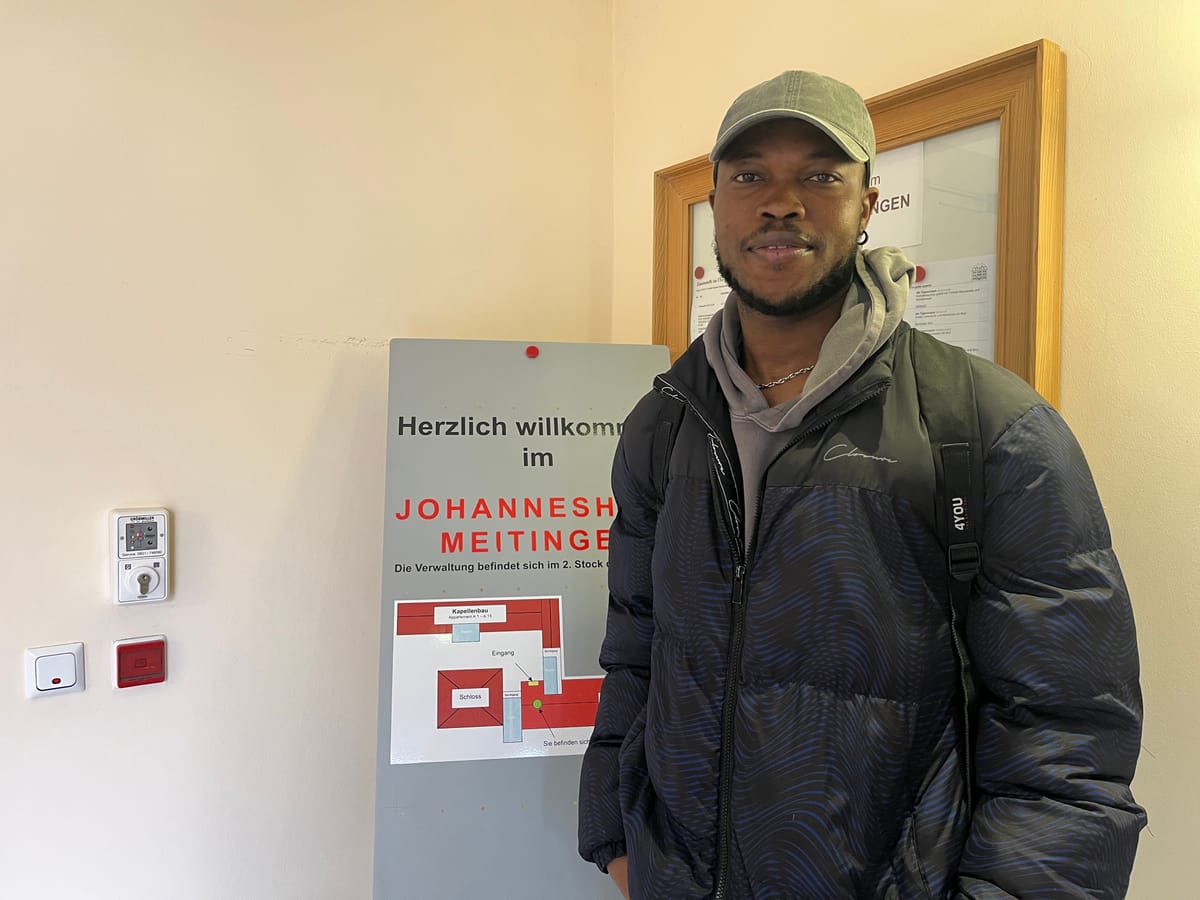
As a member, you get exclusive access to all Dossier articles – on our website and in the member area at the end of this newsletter edition. Happy reading!
kohero exists only because people like you read, support, criticize, and accompany us. We are very happy about your feedback: What do you wish for from kohero in the new year? What can we do better? Which topics do you personally miss? Feel free to write to us at hussam@kohero-magazin.de.
Thank you for being part of kohero.
Spring greetings,
Your kohero team 💜
P.S.: As you may have noticed, we are (once again) looking for a new office. If you hear or read anything, feel free to write to us about that as well at hussam@kohero-magazin.de. We are grateful for any tip and will of course keep you updated here.
Recommendation from the Online Editorial Team
nelken & nostalgie is the newsletter for culinary explorers who want not only to enjoy food but also to understand its roots and personal stories of people from around the world.
In the current issue, our author Lasab writes about Ethiopian Easter traditions, a feeling of togetherness, and the dish that absolutely must not be missing. Happy reading and cooking!
 Kady Manneh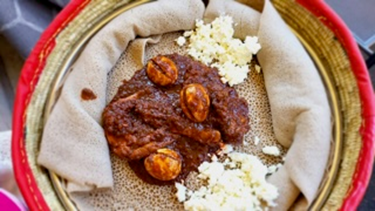
Join the conversation with us!

In the kohero Salon migrant authors read from their books. Afterwards, you have the opportunity to exchange ideas and discuss with the authors.
This time: “Baba Issues” by Tessniem Kadiri
Tessniem Kadiri deals with the most formative and also most difficult relationship in her life: that with her father. Since she was a small child and observed the loving interactions of her friends with their fathers, she wondered where the distance that always stood between her and her father came from. Driven by insatiable curiosity and a strong will, the two repeatedly got into seemingly irresolvable conflicts until a break was inevitable.
Her Baba Issues don't let her go. Does the toxic male image with which her father grew up in rural Morocco fail him in maintaining a loving relationship with his daughters? Would everything be different if an older sister had fought all these battles for her? What is real emancipation? Does she therefore have “Daddy Issues”?
Tessniem Kadiri, a native of the Ruhr region with a Moroccan migration background, started working as a journalist as a teenager. Today, she works as a presenter of the renowned Weltspiegel (ARD) and as an author and host for the WDR Newsroom, among others. She writes articles, columns, and gives workshops.
All information about the reading can be found at kohero-magazin.de. The event is supported by the dhu Foundation.